Museums
Blue Penny Museum
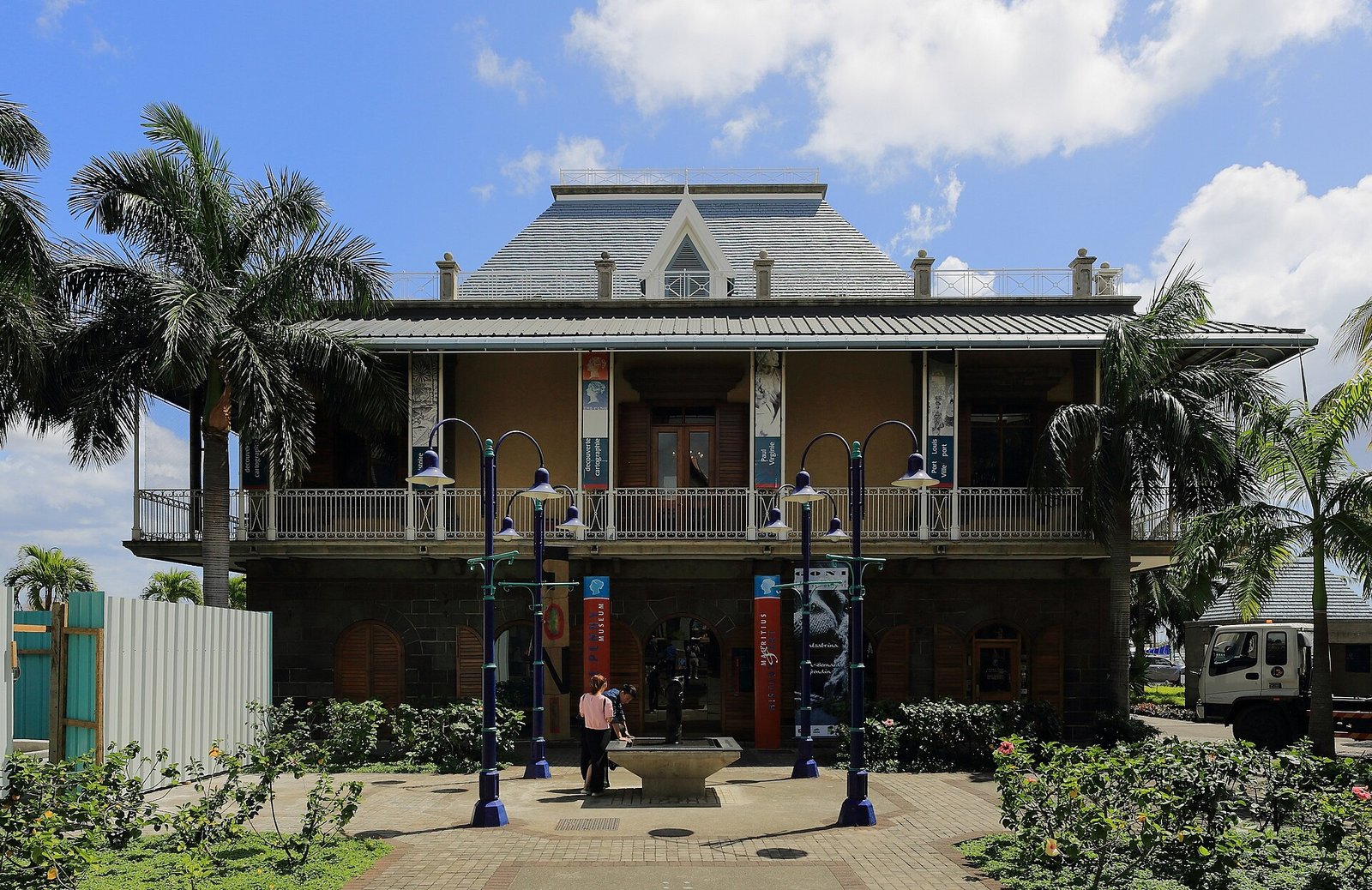
The Blue Penny Museum is in the biggest mall of Port Louis, the Caudan Waterfront. The modern museum, which is dedicated to the history and art of the island, opened in November 2001 and has attracted a lot of visitors ever since.
The museum exhibits two issues of the world-renowned “Post Office” stamps. The orange-red one penny and the deep blue two pence stamps are displayed for ten minutes at a quarter past every hour, to protect them from ageing. For the rest of the time reprints are shown.
The collection also includes old marine maps, paintings, sculptures, stamps, engravings and old documents, which tell about Mauritian history and culture.
Downstairs you will find a room dedicated to the legend of Paul and Virginie. Various editions of the famous novel, paintings and an impressive statue tell the tragic story of the couple.
As the museum owns more than 10,000 items, which cannot all be shown at the same time, temporary exhibitions are organised regularly.
In the souvenir shop you can get nice souvenirs from Mauritius, designed for the museum, such as replicas, postcards or decorative objects.
You should allow between 30 and 90 minutes for your visit. Photography is allowed in the museum, except in the stamps room.
The collection is attractively presented with modern staging techniques, sounds, special light effects and multimedia screens. Information boards in English and French explain the exhibits.
Opening hours:
Monday to Saturday: 9:30 am to 4 pm
Sunday and public holidays: closed
Tickets:
Adults: 325 Rs
Children and students: 200 Rs
Family (2 adults + 2 children): 820 Rs
Mauritian residents (adults): 50 Rs
Blue Penny Museum
Le Caudan Waterfront, Port Louis
Phone: +230 210 9204
Email: info@bluepennymuseum.mu
bluepenny.museum
Google Maps: Blue Penny Museum
Photographic Museum
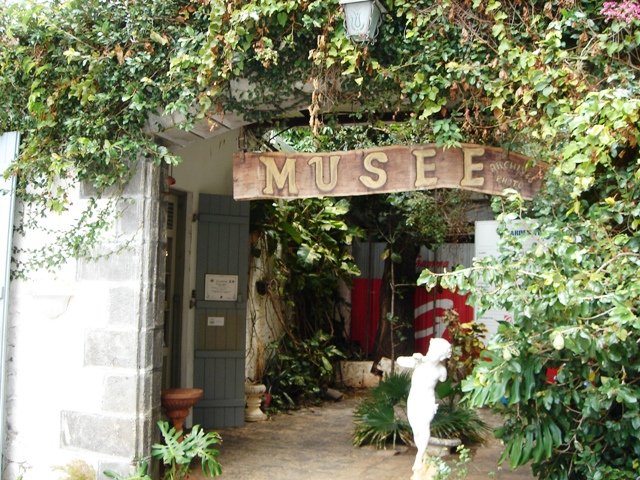
In a backstreet in the centre of Port Louis, almost facing the old theatre, a little sign shows the way to a collection of inestimable value: the only photography museum in Mauritius and the surrounding islands. This private collection is housed in a historic, shuttered cottage next to a little romantic garden. When you enter, a little bell rings at the door and a member of the Bréville family comes out of the archives to give every visitor a warm, personal welcome.
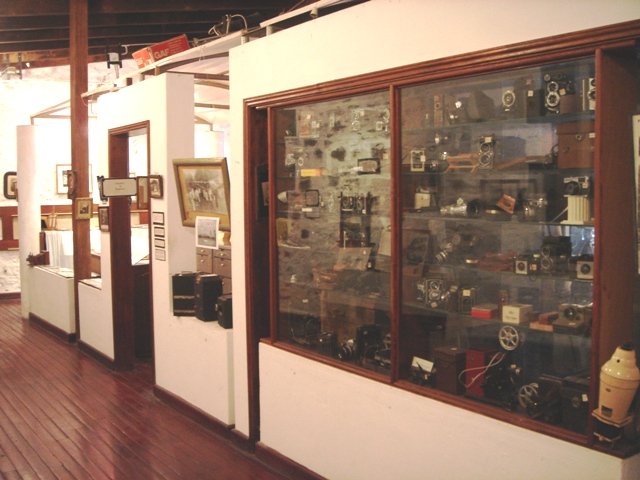
The exhibition shows the development of cameras and of photography in Mauritius in chronological order. It starts with one of the first photographs taken in Mauritius in 1840 and the immense cameras of the 19th century, and leads to cameras that already look similar to today’s analogue cameras. You can also see historical cinema projectors and the printing machines used for the first newspaper of Mauritius, printed in 1773. The camera used in 1860 to photograph arriving Indian workers, to make it easier to catch them if they ran away, is also on display. A series of contemporary photographs, renewed from time to time, tops off the visit.
In the centre of the exhibition hall is a shelf filled with all kinds of books about photography. Another highlight is kept in dimmed showcases: daguerreotypes, the first photographs ever taken, named after the inventor Jacques Daguerre. These are copper plates coated with a thin layer of silver and sensitised with a chemical solution. The image is mirror-inverted and is usually kept in airtight cases under a glass cover. Hidden in chests of drawers underneath is one of the world’s largest collections of postcards, which the family gladly opens for interested visitors. All kinds of motifs showing Mauritius are archived, as well as 40 private photo albums.
Here you can take a very special and meaningful journey through photography to Mauritius and its history. The Bréville family willingly takes time to share its broad knowledge with visitors.
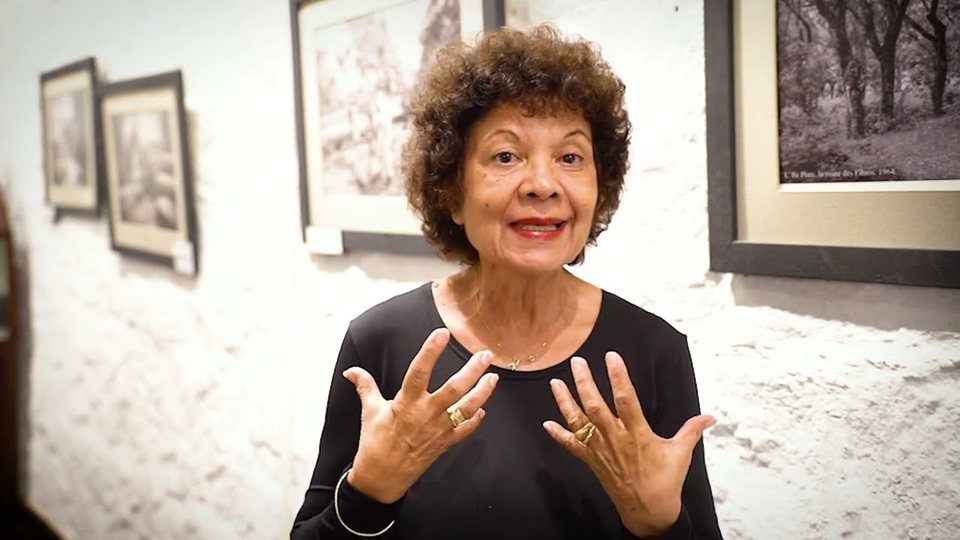
The museum was founded in 1966 by the photographer Tristan Bréville, who passed away in 2022, and his wife Marie Noelle, and the family keeps it going today. Fascinated by photography from an early age, Tristan Bréville did research all over the world and purchased these little pieces of Mauritian history to save them from oblivion. The collection consists of more than 1 million negatives, more than 5,000 glass negatives, 30 daguerreotypes, 9,000 postcards and more than 1,000 cameras. But the most important thing is meeting a family who have spared no effort to preserve the memory of their country.


Musée de la Photographie
Rue de Vieux Conseil et W. Churchill, Port Louis
Phone: +230 211 1705
Opening hours: Monday to Friday, 10 am to 3 pm
Entrance fee: please ask at the museum or check the Facebook page for the current fee.
Facebook page
Google Maps: Musée de la Photographie
Natural History Museum
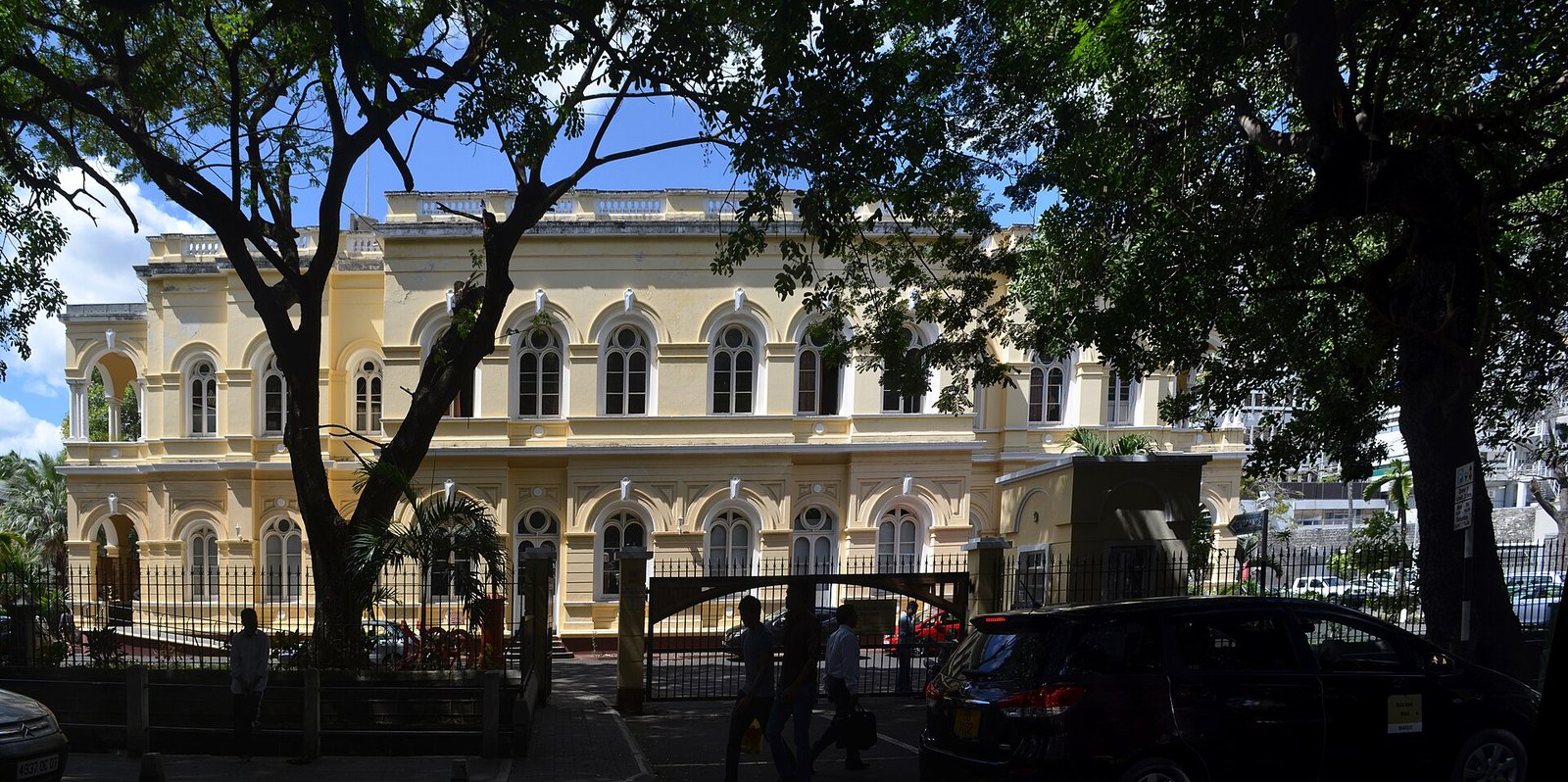

The Natural History Museum is in the centre of Mauritius’ capital Port Louis, in the colonial villa of the Mauritius Institute. It is the place to be for a calm, cool rest from the hustle and bustle, and while resting you can extend your knowledge about Mauritius’ flora and fauna. The museum was founded in 1842 and is Mauritius’ oldest public museum.
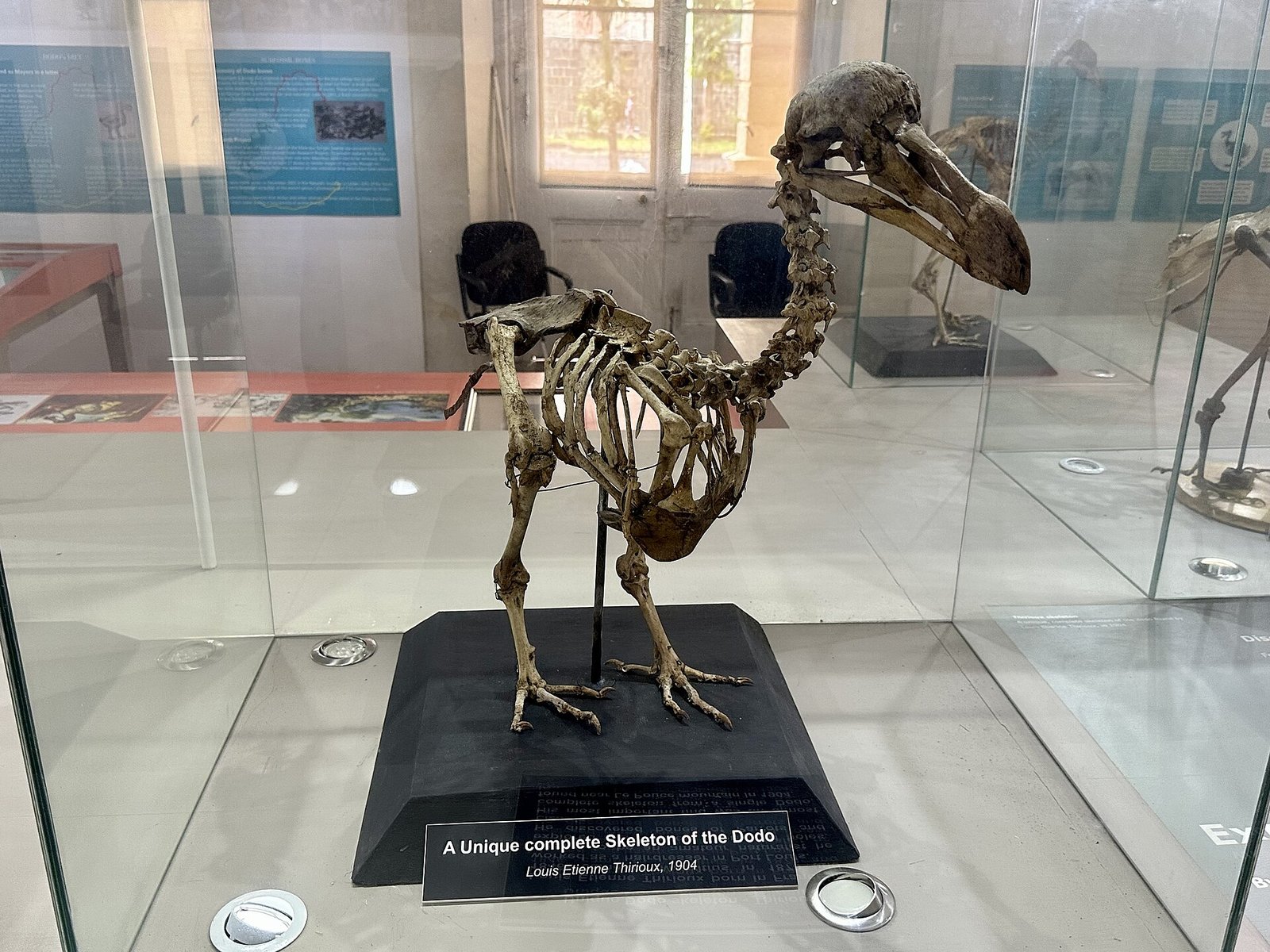

The exhibition consists of four rooms. In the first, the main hall, extinct sea and shore birds are on display. The second gallery is dedicated to the underwater world: more than 100 species of fish that exist in Mauritian waters are shown, huge stuffed fish hang from the ceiling, and you can see countless kinds of shells, among them a 70 kg giant clam. The third hall provides information about the geology and meteorology of the mainland, and extinct, stuffed giant tortoises are exhibited in the centre of the hall. The showcases show everything from the water cycle to fossils, insects, butterflies, different types of wood and an oversized plastic snail model.
The fourth and last room is the highlight of the museum. Its exhibition is more modern than in the other rooms, and everything in it is about the famous landmark of Mauritius, the dodo. Its significance is shown with the help of matchboxes, stamps and banknotes on which a dodo has been printed. You can see both a replica and some skeletons of the unusual pigeon, and a film shows the excavation of dodo skeletons at Mare aux Songes by a Mauritian-Dutch team.
Opening hours:
Monday, Tuesday, Thursday and Friday: 9 am to 4 pm
Wednesday: 11 am to 4 pm
Saturday: 9 am to 12 noon
Sunday and public holidays: closed
Entrance is free of charge.
Natural History Museum
Mauritius Institute Building, Chaussée, Port Louis (between Jardin de la Compagnie and Government House)
Phone: +230 211 7794 / 211 6415
Email: mimuse@intnet.mu
Mauritius Museums Council
Google Maps: Natural History Museum